

Phothera supports Vitiligo Awareness Month with proven phototherapy for patients at every state of their journey.
Shine a Light on Vitiligo
The Importance of Vitiligo Awareness Month
Thank you for taking the time to help get involved in raising awareness of vitiligo. Vitiligo is a chronic, autoimmune disease that can progress over time. It can also significantly impact quality of life and psychosocial well-being.¹
Up to 3 million patients in the United States may have symptoms of vitiligo2
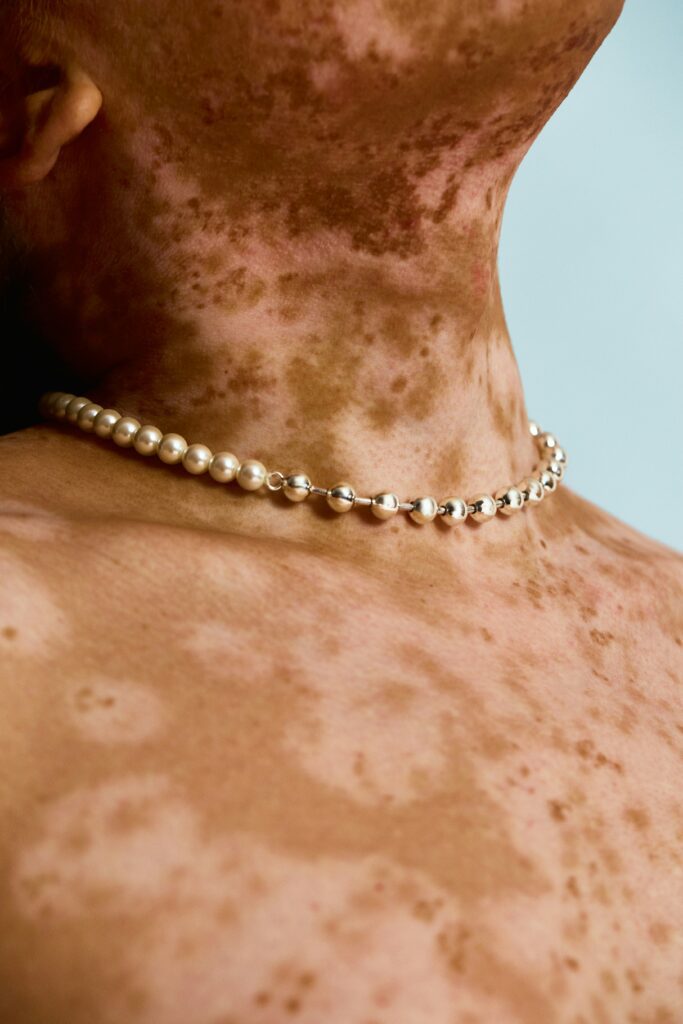
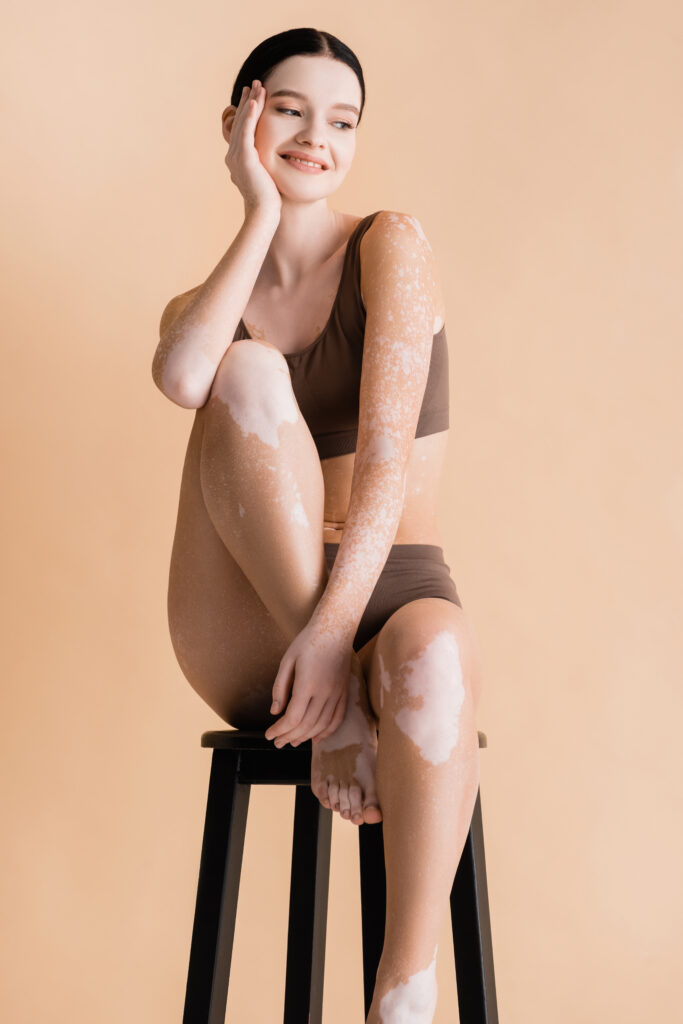
Vitiligo affects people of all ethnicities, skin types, ages, and sexes.3
Your Work Matters
What You Can Do for Your Vitiligo Patients
Patients may experience a variety of different emotions, including fear, uncertainty, embarrassment, or even apathy. Your dedication to helping patients with vitiligo through education, early intervention, and support can help change the trajectory of patient care for the disease. We here to help equip you and your stuff with tools to help ease the conversation into potential treatment options.
Narrowband ultraviolet B (NB-UVB) phototherapy has proven regardless of patient type:
Pediatric

NB-UVB is considered a viable treatment option and is well-tolerated for pediatric patients under consistent physician observation.4
Pregnancy

NB-UVB has been a proven treatment option for pregnant and lactating women under the supervision of a physician.5
Geriatric

Studies show phototherapy to be an effective and reliable treatment for geriatric patients with fewer side effects than other treatment options.6
Immunocompromised

Phototherapy remains a key treatment option for patients in whom systemic immunomodulatory therapy is contraindicated.7
Learning Opportunity
As part of the month of activities, we invite you to join us on June 25 starting at 5:15pm EDT, for a webinar on the Practical Decisions in Vitiligo Care to help provide you and your staff with educational information to advance care in your practices for patients with vitiligo.
Our panel of leading dermatology experts will have a case-based discussion covering:
- Understanding patient burden in vitiligo
- Making confident treatment decisions, including when and how to initiate treatment
- How NB-UVB phototherapy fits into real-world vitiligo treatment decisions
- Achieving visible outcomes in clinical practice through practical, evidence-informed care, including the role of at-home phototherapy
Meet our Speakers
Dr. Iltefat Hamzavi, MD
Board Certified Dermatologist at Henry Ford Health
Member of the American Academy of Dermatology (AAD).
Dr. Iltefat Hamzavi is also co-director of the investigator-initiated research unit at Henry Ford Hospital, where his work focuses on pigmentary disorders, photomedicine, and hidradenitis suppurativa. He completed his dermatology residency at Wayne State University, followed by an advanced laser and photomedicine fellowship at the University of British Columbia He has served as founding Co-Chair of the Global Vitiligo Foundation and President of the Hidradenitis Suppurativa Foundation. He has co-authored over 300 peer-reviewed papers garnering more than 20,000 citations, ranking him in the top 0.5% of all physicians for academic productivity, and has been honored by the AAD with the John Kenney Lifetime Achievement Award.

Dr. Erum Ilyas, MD, MBE
Board Certified Dermatologist at Schweiger Dermatology Group
Member of the American Academy of Dermatology, Diplomate of the American Board of Dermatology, Fellow of the American Society of Dermatologic Surgery, member of the Society for Pediatric Dermatology, Pennsylvania Academy of Dermatology, and Philadelphia Dermatological Society.
Dr. Ilyas has presented nationally and authored several peer-reviewed journal articles and textbook chapters. Dr. Ilyas has served with the AAD and the American Society for Dermatologic Surgeons as a State Advocacy Leader. She has visited Capitol Hill with the AAD to advocate for restrictions on tanning bed usage for pediatric patients, increased research funding for rare diseases, and increased access to pharmaceuticals at affordable prices for patients. She recently worked with local state leaders to successfully push for legislation permitting students in the state of Pennsylvania to apply sunscreen in school without a doctor’s note.

Dr. Omar Noor, MD
Board Certified Dermatologist and Medical Director at Rao Dermatology and Lucid Dermatology
Dr. Omar Noor has a faculty affiliation at Penn Medicine Princeton Health. He also serves as the official dermatologist for the Brooklyn Nets and New York Red Bulls. Dr. Noor has authored multiple peer-reviewed publications and contributed to the dermatology literature across areas including acne, psoriasis, and rosacea. A frequent invited speaker at national and international conferences, he is recognized for his leadership in advancing evidence-based dermatology and improving patient outcomes.

Register for the Webinar
Discover our line of home NB-UVB phototherapy devices
Learn how to prescribe home devices for your appropriate patients
REFERENCES:
- Taïeb A, Picardo M. N Engl J Med. 2009;360:160–169.
- Napatalung L, et al. JAMA Dermatology. 2022. doi:10.1001/jamadermatol.2021.4724.
- Bergqvist C, Ezzedine K. Vitiligo: a review. Dermatol. 2020;236(6):571-592. doi:10.1159/000506103
- 3Jury CS, McHenry P, Burden AD, Lever R, Bilsland D. Narrowband ultraviolet B (UVB) phototherapy in children. Clin Exp Dermatol. 2006 Mar;31(2):196-9. doi: 10.1111/j.1365-2230.2006.02061.x. PMID: 16487089.
- Myers E, Kheradmand S, Miller R. An Update on Narrowband Ultraviolet B Therapy for the Treatment of Skin Diseases. Cureus. 2021 Nov 1;13(11):e19182. doi: 10.7759/cureus.19182. PMID: 34873522; PMCID: PMC8634827.
- Bulur, I., Erdogan, H. K., Aksu, A. E., Karapınar, T., & Saracoglu, Z. N. (2018). The efficacy and safety of phototherapy in geriatric patients: a retrospective study. Anais brasileiros de dermatologia, 93(1), 33–38. https://doi.org/10.1590/abd1806-4841.20185468.
- Rácz, E., & Prens, E. P. (2017). Phototherapy of psoriasis, a chronic inflammatory skin disease. Advances in Experimental Medicine and Biology, 287–294. https://doi.org/10.1007/978-3-319-56017-5_24.