
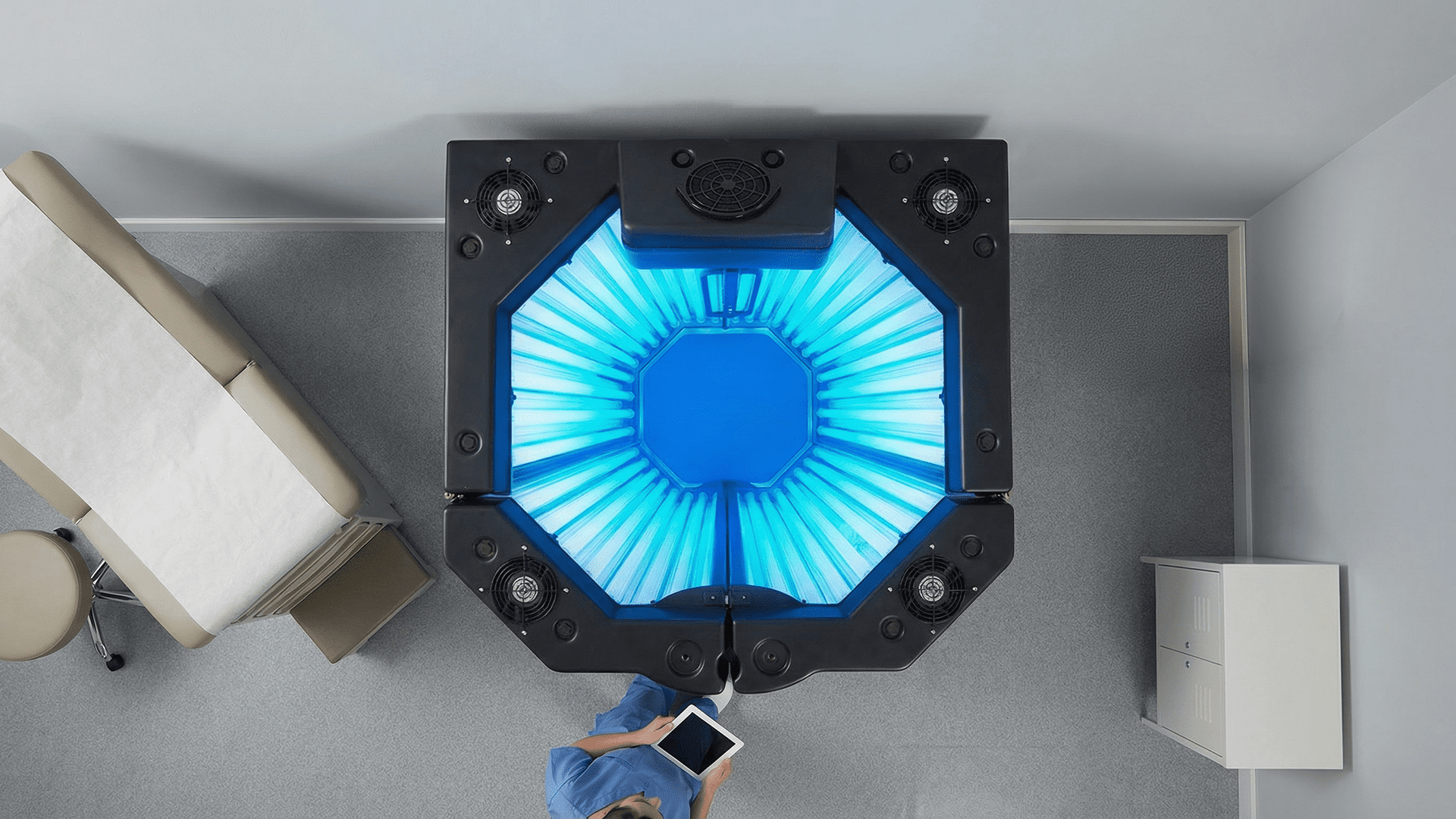
What Is Phototherapy?
Phototherapy is a medical treatment that uses a specific range of light to help treat certain health conditions. Depending on your skin, your provider may use ultraviolet (UV). The type of light works with your body’s natural processes to help improve symptoms and support healing.
More specifically, narrowband ultraviolet B (NB-UVB) phototherapy is a proven, effective, and safe treatment option for chronic skin conditions such as psoriasis, vitiligo, eczema, and other photoresponsive skin conditions.
Unlike broad-spectrum ultraviolet treatments or medications that impact the immune system more broadly, NB-UVB uses a precise wavelength of light to reduce inflammation and restore skin health.
How Does Phototherapy Work?
Narrowband UVB phototherapy uses a specific wavelength of UVB light (311–313 nm) to help treat inflammatory skin conditions. This targeted light is clinically proven to be effective while minimizing the risk of burning and long-term skin damage.
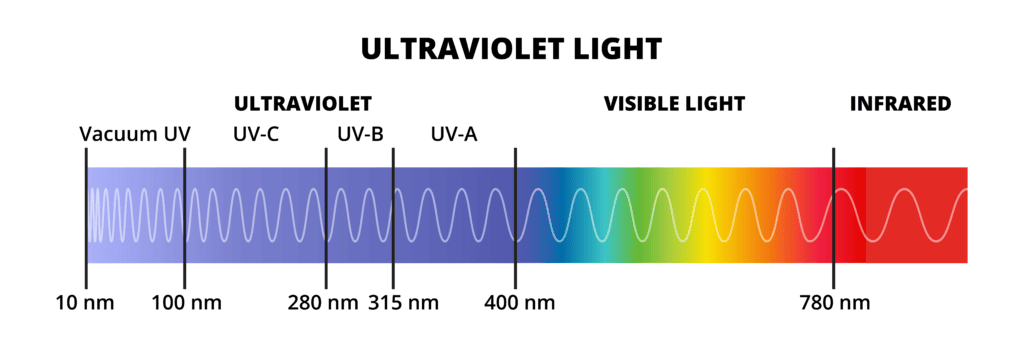
This wavelength helps:
Slow down rapid skin cell growth (which causes scaling and plaques)
Reduce inflammation and itch
Stimulate pigment production in conditions like vitiligo
Treatment typically involves 2–3 short sessions per week under medical guidance or with a prescribed home device. Improvements are often seen after 15–20 sessions, with best results usually after 30–40 treatments. Each patient will have their own unique path to improvement and will vary throughout the treatment process. Treatments are guided by physicians, who will periodically evaluate progress to determine the specific number of treatments needed.
What Conditions Does Phototherapy Treat?
NB-UVB is FDA-cleared and clinically validated for a range of chronic skin conditions, including:
- Psoriasis
- Vitiligo
- Eczema (atopic dermatitis)
- Chronic itching (pruritus)
- Cutaneous T-cell lymphoma (CTCL)
- Lichen planus
- Other inflammatory symptoms of the skin, like redness, swelling, itching, or scaling that is not caused by an infection
Why Narrowband UVB?
Narrowband UVB is often preferred over broadband UVB or other systemic treatments for several reasons:
- Targeted Treatment
- Narrowband UVB uses the most effective part of the UVB spectrum, helping reduce the risk of burning and long-term UV damage.
- Non-Systemic Drug Approach
- NB-UVB is delivered directly to the skin and may be suitable for those who are pregnant, immunocompromised, concerned about biologics, or seeking treatment options for children.
- Well Tolerated
- Narrowband UVB has been very well studied and is known for minimal side effects, including the potential to help reduce reliance on topical steroids.
- Treatment on Your Terms
- Narrowband UVB can be administered at home or in a doctor’s office, giving you greater flexibility based on your lifestyle, condition severity, and treatment plan.
- Clinically Guided at Home
- Today’s home phototherapy devices make it possible to receive provider-prescribed treatment from the comfort of your home while following a personalized treatment protocol. Learn more about Phothera’s ClearLink® Controller with guided mode technology to see how our home devices work.
A Trusted Treatment Backed by Research
Narrowband UVB phototherapy has been studied for decades, with consistent evidence supporting its efficacy and safety—even in children and extended use cases.
64% of patients were satisfied with their narrowband treatment results at just 3 months after starting with 80% saying they would recommend Phothera to a loved one or friend.1
Important safety note: Patients may experience temporary, mild reddening of the treated area that goes away with pressure (referred to as transient erythema) during the course of treatment. This reddening of the skin can occur in as little as 15 seconds of exposure, or approximately 200 millijoules of dose. Patients should stop treatment until the reddening resolves and communicate with their doctor and report the injury at support.phothera.com.
Your Path Forward
Learn if at-home phototherapy options are right for your chronic skin conditions
See the science behind Phothera & our at-home devices.
REFERENCES:
- Data on file